
Mental health challenges among children and adolescents are rising rapidly, yet many young people still struggle to access effective care.
In this episode, leaders from clinical care, digital health, and therapy explore how pediatric mental health support must evolve to meet the needs of today’s children.
Eating Disorders Are More Common Than Many Realize
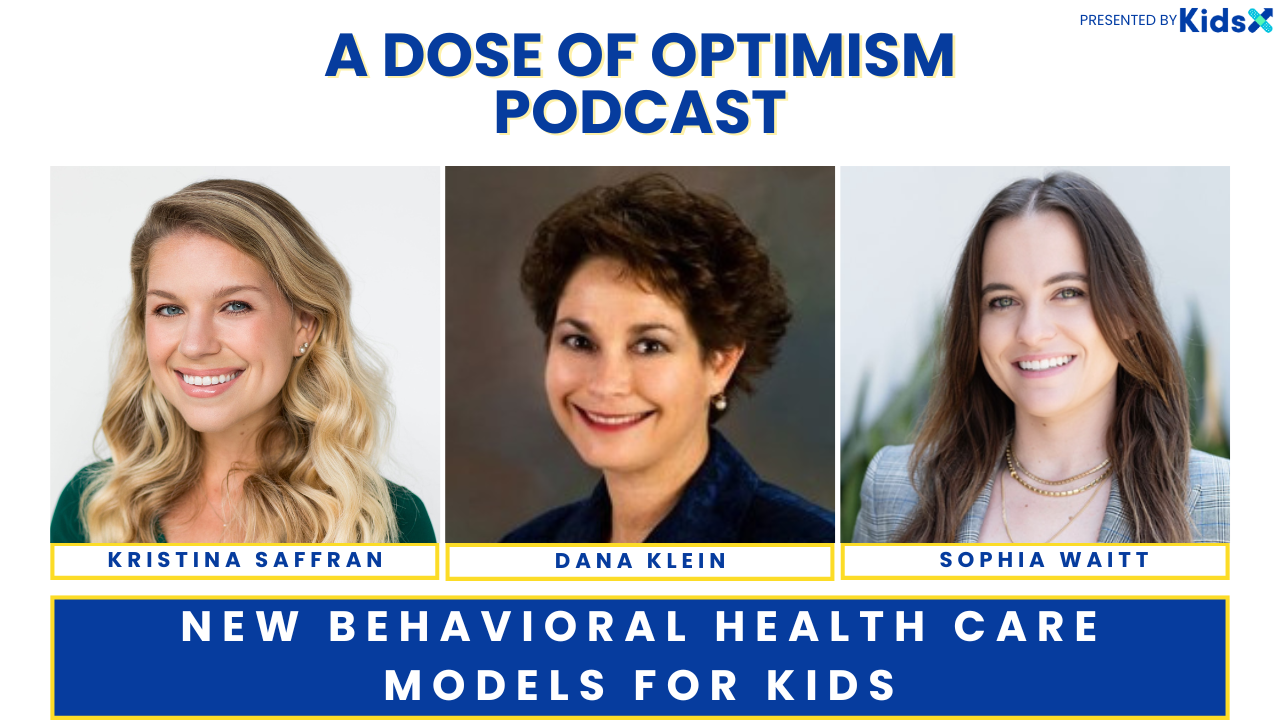
Kristina Saffran, CEO of Equip, explains that eating disorders affect approximately 30 million Americans, yet only a small percentage receive effective treatment. One of the biggest challenges is that eating disorders often go undiagnosed for years. Early intervention can dramatically improve outcomes, but many patients struggle to access evidence-based care.
Equip was built to change that by expanding access to family-based treatment (FBT) and coordinated multidisciplinary care teams that include therapists, dietitians, and medical providers working together. The goal is to bring effective treatment directly into patients’ homes through a virtual care model.
Technology Supporting Emotional Skills in Younger Children
Dana Klein, co-founder of Gheorg, discusses a new mental health platform designed specifically for children ages 7–12.
The app uses AI-driven conversations, games, and storytelling to help children:
- Identify emotions
- Understand triggers
- Build coping strategies
- Develop emotional resilience
Importantly, Gheorg integrates parent and clinician monitoring, ensuring that digital tools complement (rather than replace) human care. The platform was even designed with input from over 1,000 children, ensuring the experience resonates with young users.
The Social Media Challenge for Teen Mental Health
Therapist Sophia Waitt highlights the growing impact of social media on adolescent mental health. Young people today are exposed to an overwhelming amount of information, comparison, and identity pressure online. Many feel compelled to create digital personas that don’t reflect their authentic selves. These dynamics can intensify anxiety, low self-esteem, and identity struggles during a critical stage of brain development. As a result, many experts are calling for stronger protections and thoughtful restrictions around youth social media use.
The Future of Pediatric Mental Health
Across these conversations, a common theme emerges: Early intervention, better access, and thoughtfully designed technology could dramatically improve how we support children’s mental health. Whether through virtual care platforms, evidence-based therapies, or digital tools that build emotional skills early, innovation may play a critical role in addressing this growing global challenge.
Key Topics Discussed:
- The scale of the eating disorder crisis in children and adults
- Why many eating disorders go undiagnosed
- Family-based treatment as the gold standard for recovery
- Expanding access to evidence-based eating disorder care
- Digital tools supporting emotional resilience in children
- Mental health apps designed specifically for kids ages 7–12
- The role of AI in pediatric mental health support
- Social media’s impact on adolescent mental health
- The future of pediatric mental health innovation
About Kristina Saffran:
Kristina Saffran is the co-founder and CEO of Equip, a pioneering virtual program providing evidence-based eating disorder treatment to patients of all ages and diagnoses across all 50 states. Under Kristina’s leadership, Equip secured $110 million in total funding from prominent investors including F-Prime Capital, The Chernin Group, Tiger Global, Optum Ventures, and General Catalyst. This funding underscores Equip’s rapid expansion and success.
Since its founding in 2019, Equip has become a leader in eating disorder care, known for its innovative, evidence-based approach. The program utilizes family-based treatment (FBT), enhanced cognitive behavioral therapy (CBT-E), and dialectical behavioral therapy (DBT) to support patients in achieving lasting recovery from home. Equip’s multidisciplinary care team includes therapists, dietitians, medical providers, and mentors with lived experience, setting new standards for effective treatment.
Kristina’s commitment to transforming eating disorder treatment stems from her personal experience overcoming an eating disorder. After she was diagnosed with anorexia at age 10, Kristina spent years in and out of treatment before discovering evidence-based treatment that worked. She realized that lasting recovery was possible for everyone struggling with an eating disorder, but most people weren’t able to access effective treatment. This realization was the spark behind her professional mission—and the mission of Equip—to make eating disorder treatment that works accessible to everyone who needs it.
Kristina and her co-founder, Erin Parks, identified critical gaps in existing treatments and built Equip to address those needs. Their partnership began through early networking at academic conferences and is driven by a shared mission to transform the treatment landscape. Equip’s entirely virtual model proved to be especially adaptable and effective during the COVID-19 pandemic, positioning the company as a pioneer in telehealth for eating disorders.
As a thought leader, Kristina actively participates in high-profile discussions, podcasts, and public speaking engagements, sharing insights on evidence-based treatment, healthcare system challenges, and the future of mental health care. Her past speaking engagements include FORTUNE Brainstorm Health, APA Annual Meeting, Collision Conference, HLTH, and AHIP.
Looking ahead, Kristina envisions continuing to expand Equip’s partnerships with insurance providers and Medicaid to allow more people to access evidence-based treatment. She aims for Equip to be an available and known treatment option for patients of all backgrounds, ages, and identities.
Before co-founding Equip, Kristina co-founded Project HEAL, a leading non-profit organization that breaks down systemic barriers to eating disorder treatment by providing resources and support to those in need. Her work with both Project HEAL and Equip reflect her deep dedication to breaking down stereotypes about who gets eating disorders, dismantling stigma around eating disorders and mental health, and eliminating the treatment gap that leaves too many people suffering from a curable illness.
Kristina also acts as a mentor to other entrepreneurs in the mental health startup space, drawing from her experiences to build and scale successful ventures.
About Dana Klein:
Dana L. Klein is the Co-Founder of Gheorg as well as the current Honorary Consul of the Republic of North Macedonia in Florida.
Dana has 30+ years of Go to Market Experience specializing in New Market Development, Marketing, and Effective Project and Yield Management.
She’s also held numerous board and advisory board positions for non-profit and community groups. Dana Klein has a Master’s Degree from Emerson College in Media Management and a Bachelor of Science Degree from Syracuse University’s Newhouse School of Communications in Radio, Television, and Film Production.
About Sophia Waitt:
I work with teens and young adults navigating anxiety, neurodivergence, trauma, perfectionism, substance use, relationship challenges, and the difficulties that can come with finding direction, motivation, and independence. My style is warm, collaborative and honest, with a focus on helping you turn insight into meaningful change.
As we work together, we’ll identify what helps you feel more confident, connected, and fulfilled, and start making changes in ways that fit your life. We’ll move at your pace. If this feels right for you, reach out today!
