
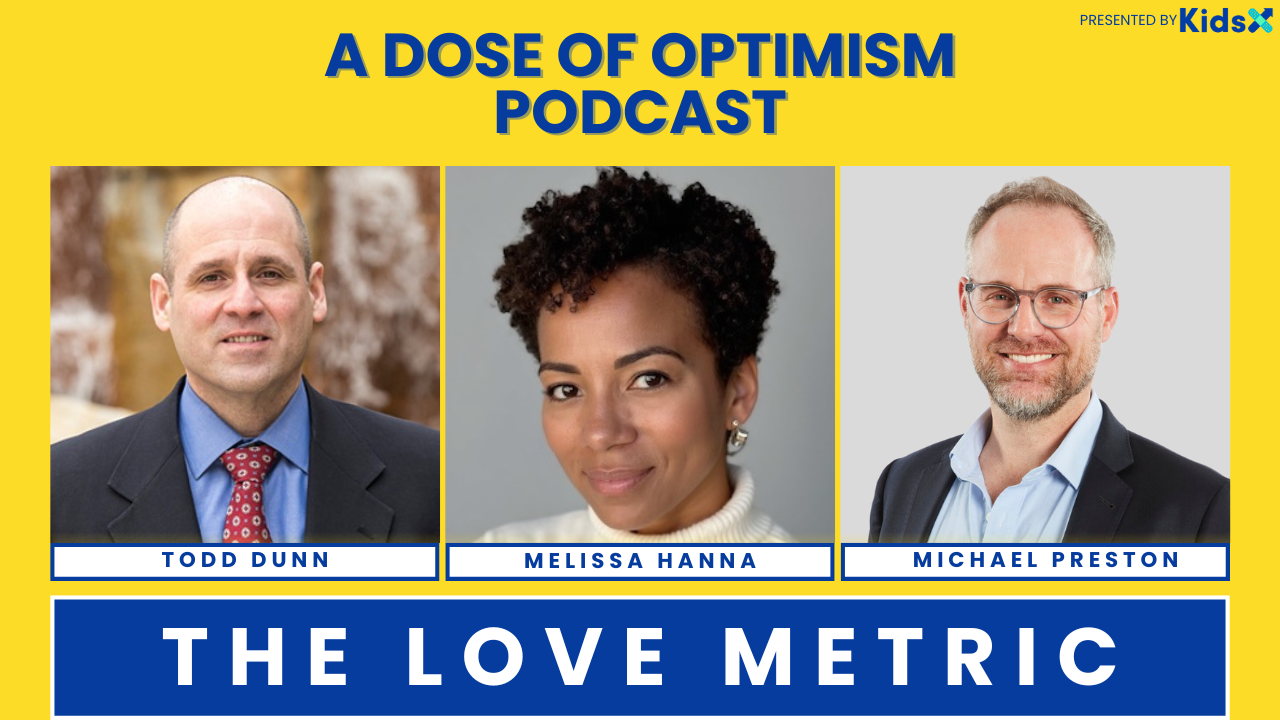
Innovation in healthcare often starts not with a breakthrough technology, but with someone willing to go see a problem up close.
That is the thread connecting this episode’s three guests: a healthcare executive turned kidney care advocate, a maternal health entrepreneur who spent years being told her vision was impossible, and a child-centered design leader helping shape how the next generation experiences the digital world.
Think Flow, Not Just Workflow: Todd Dunn on Kidney Care
Todd Dunn has spent his career visiting care environments, asking uncomfortable questions, and listening carefully to what clinicians think, not just what they do.
He learned the distinction early, from an anesthesiologist who handed him two nearly identical medication vials and explained that giving the wrong one could be fatal. The lesson wasn’t just about drug safety. It was about the difference between observing a workflow and understanding the thinking that drives it.
Todd calls this “think flow,” and it shapes how he approaches innovation at Accuryn Medical, where he is working to modernize how kidneys are monitored in acute care.
The kidney, he argues, is one of the most important organs in the ICU, and one of the least supported by modern technology. While the heart, lungs, and brain are surrounded by digital monitoring tools, kidney function is still largely tracked using a gravity-fed urinary catheter invented in 1936 and a serum creatinine lab test that only reveals damage after it has already occurred.
The result: nurses manually managing fluid outputs, intensivists making decisions without reliable data, and patients at elevated risk for acute kidney injury that can have serious and lasting consequences.
Accuryn’s technology aims to bring kidney monitoring into the same category as other vital signs, giving clinical teams accurate, real-time data and reducing the manual burden on nursing staff. The nurses, Todd notes, tend to love it. In one early deployment, a nurse manager labeled the devices “do not remove”, because nurses from other floors kept borrowing them.
That, he says, is the “love metric”: not the workflow benefit, but the change people actually feel in their working lives.
Connecting the Dots: Melissa Hanna on Maternal Care
Melissa Hanna started Mahmee a decade ago with a vision that was initially met with skepticism: that a platform could meaningfully coordinate the fragmented experience of pregnancy and postpartum care in the United States.
The skepticism was understandable. Maternal mortality in the United States has risen year over year for more than three decades. The country ranks last among peer nations in maternal and infant health outcomes while spending more than any of them.
The problem, as Melissa sees it, is fragmentation, fragmented data, uncoordinated care, and systems that treat mother and baby as separate patients rather than a connected dyad. An OB, a pediatrician, and a postpartum nurse may all be caring for the same family using different platforms, billing systems, and workflows that don’t communicate.
Mahmee works across that continuum, from the first trimester through a baby’s first birthday, providing wraparound services including doula support, registered nursing care, lactation support, remote patient monitoring, and mental health resources. The platform generates a longitudinal data set that helps identify clinical risks, like a history of hypertension predating a pregnancy, that might otherwise go unnoticed until a crisis occurs.
The first 30 days postpartum, Melissa notes, are among the highest-risk windows in maternal care. Most clinical follow-up doesn’t happen for several weeks after discharge. Mahmee’s care model is designed to fill that gap, monitoring, checking in, and flagging concerns before they become hospitalizations.
Among the outcomes Mahmee has observed in its population: a 20% reduction in C-section rates and a 55% reduction in preterm birth rates. Melissa is careful to note that not every C-section can or should be avoided, but that walking alongside a patient through pregnancy, building confidence and continuity, can change the trajectory.
Mahmee also operates 11 brick-and-mortar clinic locations across California, often co-located inside OB and pediatric offices and hospitals. Sometimes, she says, virtual care is wonderful, and sometimes you just want to meet in person.
Designing for Children, Not Just Around Them: Michael Preston on Child-Centered Innovation
Michael Preston leads the Joan Ganz Cooney Center, a research and innovation arm of Sesame Workshop, the organization behind Sesame Street, which has been educating and delighting children for 56 years.
His team’s work sits at the intersection of child development, design practice, and emerging technology. And one of the things he is most excited about is a deceptively simple idea: that children should be partners in designing the products they use, not just testers at the end of the process.
In practice, that means sitting on the rug with younger kids, using markers and everyday objects to explore ideas together. It means asking questions and being willing to be surprised, as they were when working on a reading app for older kids who struggled with fluency. The children didn’t want gamified progress badges or public accomplishments. They wanted to be supported quietly, without drawing attention to their struggles. The design team hadn’t expected that.
Michael’s second area of focus is what he calls “well-being by design”, a framework developed in collaboration with UNICEF and the LEGO Group that starts from what children around the world say they actually want from their digital experiences. The answers include autonomy, emotional recognition, a sense of growing competence, social connection, and creativity. The goal is to translate those values into concrete design patterns that product teams and startups can actually use.
On AI, Michael takes a measured view. He sees genuine promise in adaptive learning tools, personalized educational experiences, and data that can help educators and families understand what a child needs next. But he also raises questions that don’t yet have easy answers: What cognitive development is lost if AI smooths away productive struggle? What happens to social development when children’s relationships increasingly happen through screens? These, he argues, are the questions worth designing around, not just for today, but for the long term.
Key Topics Discussed:
- The “think flow” principle: understanding how clinicians think, not just how they work
- Kidney monitoring in acute care: why real-time data matters for ICU patients
- Acute kidney injury: scope of the problem and its downstream consequences
- The “love metric”: how to identify what clinical teams actually want from innovation
- Maternal mortality in the United States and the access gap
- Fragmented maternal data and uncoordinated postpartum care
- Doula services as a clinical team asset, not a luxury
- The postpartum risk window and early intervention
- Preterm birth and C-section rates in Mahmee’s patient population
- Brick-and-mortar clinic expansion as a complement to virtual care
- Child-centered design: involving children as partners, not just testers
- Well-being by design: defining digital health for children
- AI in education: promise, uncertainty, and what should be preserved
- Sesame Street’s role in helping families navigate a complex world
About Todd Dunn:
I have spent my career helping businesses drive effective transformation and deploy breakthrough solutions. As the CEO of Accuryn Medical, I’m excited to reimagine the way kidneys are cared for. In my time at Atrium Health, I recognized the value that Accuryn could bring to his hospital, their nursing teams and the impact it could have on patient outcomes and hospital efficiency. Using my background in hospital operations, I’m excited to help drive Accuryn’s operations and innovative efforts in this next phase of growth.
About Melissa Hanna:
Driven by her passion for equitable maternal care, Melissa leads Mahmee’s groundbreaking approach to pregnancy and postpartum support. With a legal and business background, she’s dedicated her career to bridging gaps in the healthcare system—ensuring every parent has a trusted team behind them. Born into a family of maternal health expertise, Melissa grew up watching her mother—renowned Labor & Delivery Nurse and Lactation Consultant, Linda Hanna—care for countless new parents and babies. Together, they founded Mahmee to unite that deep clinical insight with bold, tech-driven solutions, ensuring no family has to navigate pregnancy or postpartum alone.
About Michael Preston:
Michael Preston is the Executive Director of the Joan Ganz Cooney Center, an independent research and innovation lab within Sesame Workshop dedicated to shaping a positive digital future for children. Named after Sesame Street’s visionary co-founder, the Center conducts research on emerging technologies, collaborates with industry leaders, academics, and educators to translate insights into action, and engages policymakers and investors in meaningful conversations about children’s learning and well-being. By actively involving young people in co-designing the technologies they use, the Center ensures innovations that empower children to learn, grow, and thrive.
With 25 years of experience driving educational innovation across K-12, higher education, and informal learning settings, Michael specializes in child-centered design, transformative learning models, and systemic change. He co-founded CSforALL, the national hub for the Computer Science for All movement, and has led digital learning initiatives at the NYC Department of Education, Columbia University, and New Visions for Public Schools.
Michael holds a Ph.D. in Cognitive Science in Education from Teachers College, Columbia University, and a B.A. from Harvard College.
