
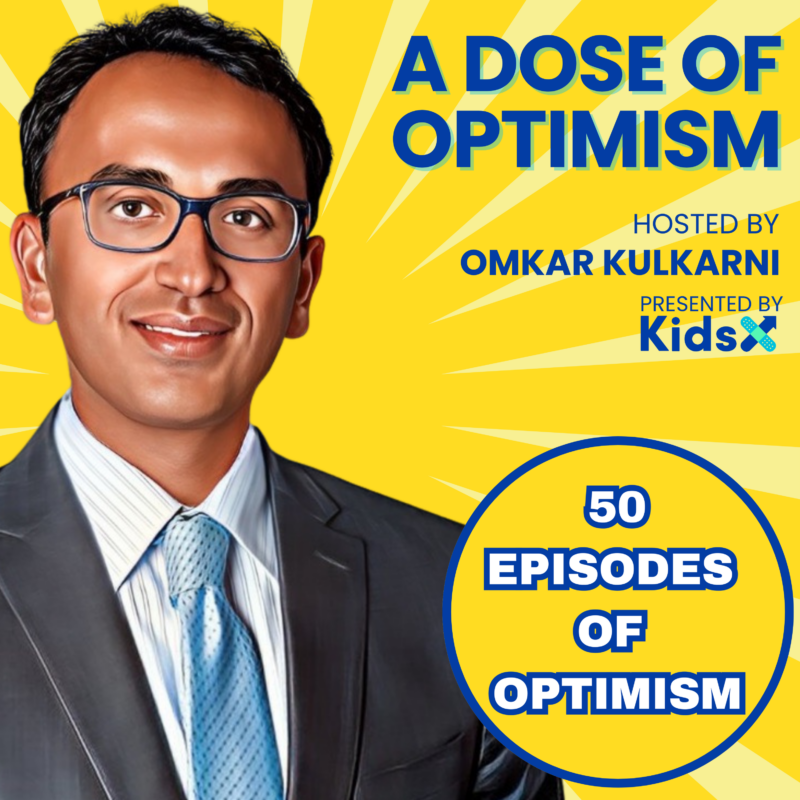
When Omkar Kulkarni launched A Dose of Optimism, he had one goal: give a microphone to the people quietly working to make healthcare better for kids. Fifty episodes later, over 100 guests, and countless conversations about what’s possible, it felt like the right time to turn the mic around.
For episode 50, Omkar became the guest.
On Why Children’s Healthcare
Omkar traces his path to pediatrics to becoming a parent. Watching the realities of raising a healthy child, he recognized how hard it actually is, and how much better it could be. When the opportunity at Children’s Hospital Los Angeles arrived, it wasn’t just a career move; it was personal.
On The Coolest Innovation He’s Seen
Omkar points to the AI clinical scribe, a tool that listens to the conversation between doctor, parent, and child and automatically documents the visit in the patient’s electronic record. He saw an early demo before most people had heard of generative AI.
“It felt magical,” he says. “Like something I’d never experienced before.”
What excites him now is the scale: more doctors using these tools every year, spending less time typing and more time with their patients.
On AI And What It Actually Is
Asked how he’d explain AI to a 10-year-old, Omkar keeps it grounded:
“It takes lots of data, finds patterns, and uses those patterns to make a guess or create something new. It’s not alive. It has no feelings. It’s a tool built by humans.”
He’s clear that AI won’t replace doctors or nurses, but it will change what their jobs look like.
“Nursing is about caring for people. AI is going to help them do more of that, not less.”
On The Mental Health Gap
Omkar believes the single most important problem technology can help solve for kids is mental health. We have robust systems for physical health. The infrastructure for emotional and mental health, especially preventive, early-stage support, is still catching up.
“If we could help kids manage their emotional health starting in kindergarten, the impact on teenagers and adults would be enormous.”
On What Makes A Startup Succeed In Pediatrics
Two things: understanding who you’re talking to, and pairing confidence with humility. Omkar has seen too many startup founders walk into a hospital with the right product and the wrong pitch. The best ones, he uses Akili as an example, a company that built clinically validated video games as treatment for children with certain mental health conditions, are people who believe deeply in what they’re building and are also honest about how far they still have to go.
On Why This Show Exists
Fifty episodes in, Omkar’s answer is simple: he wanted people to hear stories of those who see something wrong in the world and decide to fix it. Not just announce the problem. Actually try.
“That first step, from idea to maybe I could do this, is the longest and the hardest. I hope this show inspires people to take it.”
