
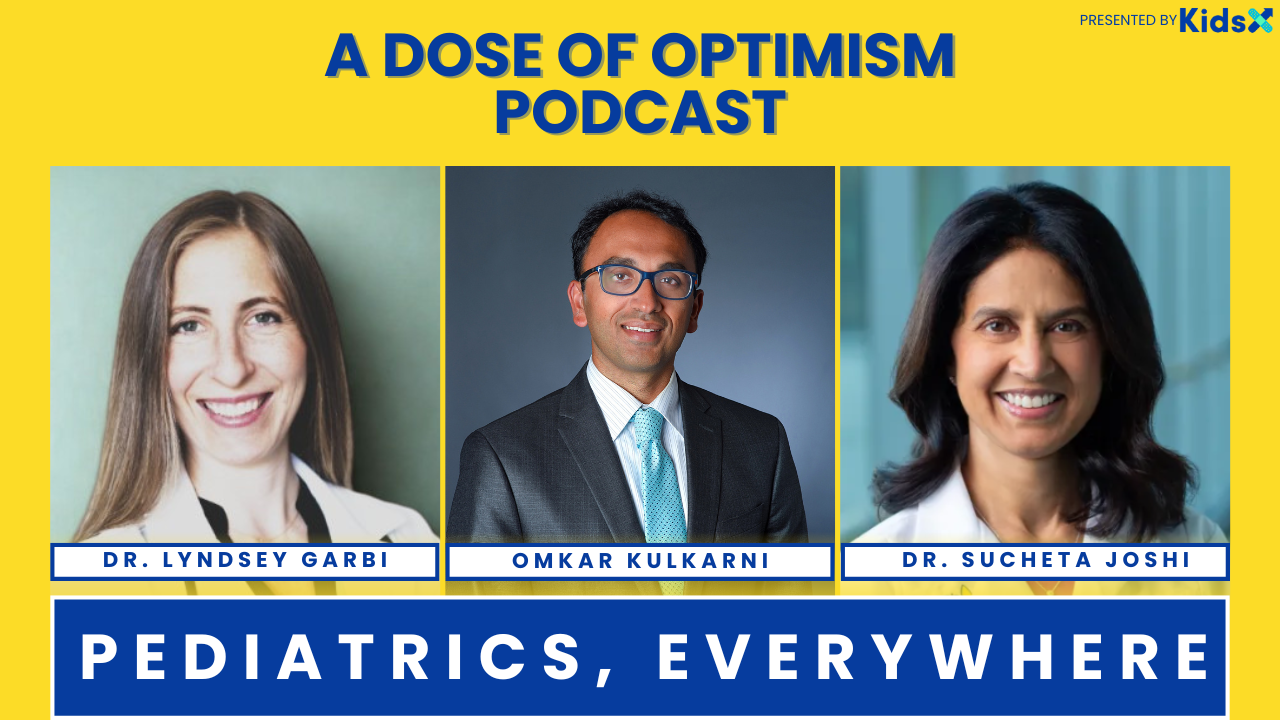
Pediatric Care in the Home: Dr. Lyndsey Garbi on Blueberry Pediatrics
About half of children in the United States don’t have easy access to pediatric healthcare. The shortage of pediatricians is already significant and projected to reach 15,000 to 20,000 by 2036. Only about 14% of emergency rooms are equipped to handle pediatric visits well, a gap that contributes to higher morbidity and mortality for children who have no other option.
Dr. Lyndsey Garbi built Blueberry Pediatrics with that reality in mind.
Blueberry is a pediatric telehealth service that sends families a diagnostic kit, including an otoscope, pulse oximeter, and thermometer, and connects them via call, chat, or video with board-certified pediatricians. The goal is simple: meet families where they are, before a manageable problem becomes a serious one.
For a family in rural America who can’t easily drive to a pediatrician, a children’s hospital, or even a general ER equipped to handle kids, Blueberry offers something that didn’t previously exist: a pediatrician, in their home, with the tools to make an accurate diagnosis. An ear infection that might have gone untreated until it became something worse can be caught and addressed. A developmental question that might have gone unasked, because the nearest specialist is two hours away, can get a real answer.
The direct-to-consumer model is subscription-based at around $20 a month, covering all children in a family with unlimited access to pediatricians. But Dr. Garbi sees the larger opportunity in partnerships with health systems and payers. In a value-based care arrangement, a child who lands in the ER unnecessarily is an expensive outcome for everyone. Blueberry can intercept that visit. In a partnership with Johns Hopkins, starting with their employee population and expanding to their ACO, the results showed meaningful cost savings, enough to make the case for scaling.
The next frontier, she says, is rural health, a population that needs this most, faces the steepest access barriers, and stands to benefit most from a model built around meeting families exactly where they are.
From Mystery to Medicine: Dr. Sucheta Joshi on Genetics and Epilepsy
When Dr. Sucheta Joshi began her training in pediatric neurology, genetic testing for epilepsy existed largely at the margins, something to consider when everything else had been ruled out. The idea that a specific gene could explain why a child had seizures, and that knowing that gene could change how you treated them, was still emerging.
Over the course of her career, that has changed completely.
Today, Dr. Joshi is Medical Director of the Comprehensive Epilepsy Program at Children’s Hospital Los Angeles. The transformation she has witnessed, from genetic testing as a last resort to a central tool for diagnosis, treatment selection, and harm prevention, is one of the most significant shifts in pediatric neurology in a generation.
The implications go beyond simply naming a cause. In Dravet Syndrome, for example, mutations in the SCN1A gene affect a sodium channel. Giving a child with this mutation certain sodium channel-blocking medications can make their seizures significantly worse. Without genetic testing, that harm might not be recognized until after the damage is done. With it, clinicians can avoid those medications from the start.
Similar patterns exist for other genetic epilepsies, specific mutations that contraindicate specific treatments. Genetic testing has become not just a tool for understanding, but a tool for preventing iatrogenic harm.
Looking ahead, Dr. Joshi is optimistic about gene therapy for epilepsy. FDA-approved therapies for epilepsy don’t yet exist, but clinical trials are underway and the trajectory is clear. What’s most exciting to her is not just the potential for better seizure control, but the possibility of disease-modifying treatments, therapies that don’t just manage symptoms but address the underlying cellular and molecular mechanisms, with the potential to improve development, quality of life, and long-term outcomes in ways that anticonvulsants alone cannot.
The downstream benefits of that, she notes, extend well beyond the individual child. Reduced emergency room utilization, fewer ICU admissions, greater independence in adulthood, the case for investing in these therapies for children, she argues, is a societal one as much as a medical one.
Key Topics Discussed:
- Pediatrician shortages and access gaps in rural America
- Telehealth with diagnostic tools for home-based pediatric care
- Direct-to-consumer and payer/health system partnership models
- Value-based care and total cost of care reduction in pediatrics
- The evolution of genetic testing in pediatric epilepsy
- Using genetics to guide treatment selection and avoid harm
- Dravet Syndrome and SCN1A: a case study in precision epilepsy care
- Gene therapy in pediatric epilepsy: clinical trials and the road ahead
- Disease-modifying treatments vs. symptom management in epilepsy
- Access to emerging therapies for underserved pediatric populations
- The downstream societal value of early intervention in childhood epilepsy
About Dr. Lyndsey Garbi:
Dr. Lyndsey Garbi graduated from Emory University and attended Sackler School of Medicine. She completed her residency at Cohen Children’s Hospital, and her fellowship at Maria Fareri Children’s Hospital. Dr. Garbi is board-certified in Pediatrics and Neonatology, with a speciality in both. She loves working in medicine and thinking outside the box to positively impact famlies and their access to high quality healthcare. She also enjoys running, sunsets, and spending time with her husband, her three children, and dog.
About Dr. Sucheta Joshi:
Sucheta Joshi, MD, MS, FAAP, FAES is a Pediatric Neurologist and Epileptologist. She completed training at University of California San Francisco, Stanford University and University of Michigan School of Public Health. Dr. Joshi is Professor in Pediatric Neurology, USC KSOM, and the Medical Director of the Comprehensive Epilepsy program at CHLA. Her clinical interests involve difficult to treat pediatric epilepsy, EEG and EEG monitoring. Her clinical and scholarly interests also include improving access to epilepsy care for children in medically underserved areas using innovative methods for epilepsy care such as telemedicine and telementoring, and transition of adolescents with epilepsy to adult care.
She has served as the Medical Director, and is currently on the Advisory Committee for the American Academy of Pediatrics National Coordinating Center for Epilepsy. She has been key faculty for development of several Epilepsy ECHO projects since 2013. Dr. Joshi is Secretary of the Board of the Pediatric Epilepsy Research Consortium, an organization to foster multicenter research in Pediatric Epilepsy. She has served on the Executive Committee of the Child Neurology Society, AAP Section on Neurology, and as faculty for the AAP, American Epilepsy Society, Child Neurology Society and the International Child Neurology Association. She has mentored medical students, residents, fellows and social workers on research projects, lectured on epilepsy related topics at national and international meetings, published several peer-reviewed manuscripts, book chapters and is a reviewer for scientific journals.
