
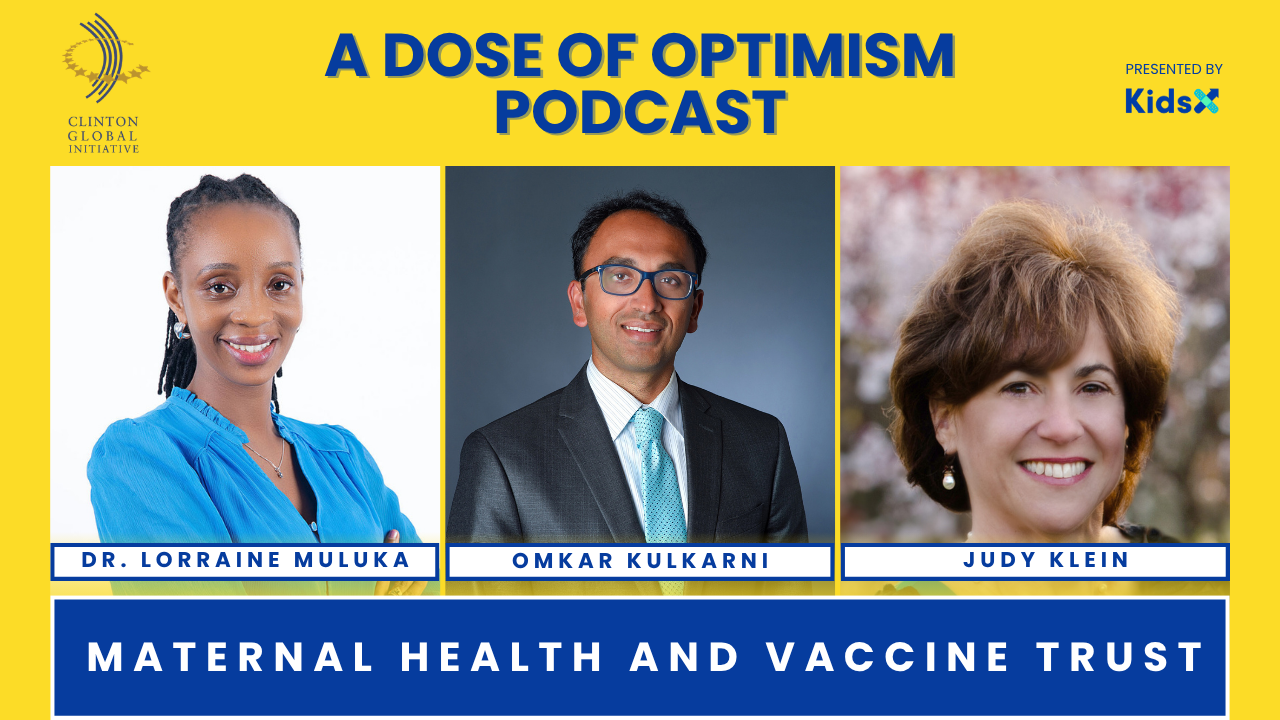
Two guests. Two continents. Two very different problems, and two approaches that share the same underlying insight: that healthcare only reaches people when it meets them where they are, in a form they can trust. Listen here.
WhatsApp as a Lifeline: Dr. Lorraine Muluka on Malaika
The maternal mortality ratio in Sub-Saharan Africa is roughly 100 times higher than in Europe. Dr. Lorraine Muluka has spent more than 15 years practicing obstetrics in Kenya. She knows the gaps that create that statistic, and she built Malaika to close them.
Malaika is a maternal health platform that provides end-to-end pregnancy care for women in Kenya, combining clinical visits with continuous digital support and peer community. The front door is WhatsApp, a deliberate choice. In Kenya, smartphone penetration is above 60% and growing, and WhatsApp is where women already are: talking to friends, old classmates, family. Malaika meets them there, on a platform that feels familiar rather than clinical.
Inside that WhatsApp experience, mothers have access to an AI-powered bot that sends daily messages, answers questions at any hour, and escalates to a human clinician when the risk profile of a question warrants it. They are grouped into cohorts of women at the same stage of pregnancy, delivering at around the same time, and they talk to each other. That peer community, Dr. Muluka says, addresses something she had practiced for 15 years without a patient ever naming it directly: the loneliness of pregnancy. A friend told her at a baby shower. She never forgot it.
When a mother comes to a Malaika clinic, the care team can pull the full longitudinal record of her pregnancy, every data point, every message, every flagged concern, and deliver a genuinely holistic clinical encounter rather than starting from scratch each visit. Emergency ambulance services are integrated for when a woman needs to reach a higher level of care quickly. Lactation support, postpartum risk assessments, and health education extend care from birth through the baby’s first six months.
The platform adapts to the population it serves. In informal settlements in Nairobi, where HIV in pregnancy was more common, the educational content was redesigned. In Garissa, where English wasn’t the primary language and the community was more patriarchal, the program was translated and expanded to include fathers, who, Dr. Muluka notes, have shown up with a level of engagement and presence she has never seen in 15 years of clinical practice. They participate in digital education sessions, sometimes with their cameras off at first, until they start asking questions. They come to in-person events. They want to be part of the journey.
Looking ahead, Dr. Muluka wants Malaika to reach women across all income segments in Kenya and expand into a second country. Her argument is simple: access to quality, affordable maternal healthcare is a right for all women. And the platform is proving it can reach the women who need it most, not just the ones who can already afford to pay.
Teaching Teens to Fight Misinformation: Judy Klein on Unity Consortium
Judy Klein founded Unity Consortium ten years ago, driven by the death of a close college friend from cervical cancer, a disease that the HPV vaccine, which didn’t exist when they were in school together, now prevents.
That personal loss has shaped everything about how she approaches vaccine advocacy: with urgency, with empathy, and with a clear-eyed understanding of why fear and misinformation win when trusted relationships are absent.
The data is sobering. Vaccine hesitancy, which has always existed, even since smallpox, has grown dramatically, particularly since COVID. Only about six in ten young parents intend to vaccinate their children. Only six in ten teens are fully vaccinated for HPV. And the information environment that shapes those decisions has changed fundamentally: four in ten young adults now favor health advice from friends and family almost as much as from physicians. A third are turning to AI for health information, AI that often pulls from uncredentialed sources. The gap between a trusted physician relationship and the algorithm in someone’s hand is shrinking in the wrong direction.
Unity’s response is a program called the Trusted Teen Community, an initiative to train 10,000 young people as peer health ambassadors, alongside 1,500 adult mentors, across communities nationwide. The program is built on a single insight from Unity’s own teen advisory council: if people understood what vaccines actually do, they might be more willing to receive them. Knowledge doesn’t guarantee trust. But ignorance allows misinformation to take root.
What makes the program distinctive is that it goes beyond information. Unity trains its teen ambassadors in the communication skills needed to have conversations about vaccines with people who don’t agree, to be empathetic, non-defensive, and genuinely curious about different perspectives. That’s the skill that turns knowledge into influence. And it’s the skill that, as Judy explains, is most requested by the young people who join.
The goal is to leverage what research has already established: that people trust those who have direct experience with their issue, who show empathy for their situation, and who are convenient. A trained teen peer ambassador in your community meets all three criteria. A physician at the other end of a phone tree doesn’t.
Key Topics Discussed:
- Maternal mortality in Sub-Saharan Africa and the structural gaps that drive it
- WhatsApp as a platform for maternal health care delivery in Kenya
- AI-powered pregnancy support and human escalation pathways
- Peer community and the loneliness of pregnancy
- Longitudinal care continuity across fragmented health systems
- Emergency ambulance integration in maternal care platforms
- Postpartum support and infant care through six months
- Cultural and linguistic adaptation of maternal health programs
- The role of fathers in pregnancy care in Kenya
- The history and current landscape of vaccine hesitancy
- How AI and social media are reshaping health information environments
- Eroding trust in healthcare institutions and what drives it
- Peer-to-peer health communication as a vaccine advocacy strategy
- The Trusted Teen Community program and its goals
- HPV vaccine coverage rates among teens in the United States
About Dr. Lorraine Muluka:
Obstetrician Gynaecologist and health entrepreneur, passionate about building maternal care systems that combine the very best of clinical care, education, and innovation. Working at the intersection of medicine, technology, and leadership to re-shape maternal health.
About Judy Klein:
Leader and expert in the healthcare industry. Deep experience and a proven record with diverse organizations to realize their goals and aspirations. Applies strategic marketing, innovative and analytical thinking, and a practical lens to create and implement vaccines and pharmaceutical solutions.
