
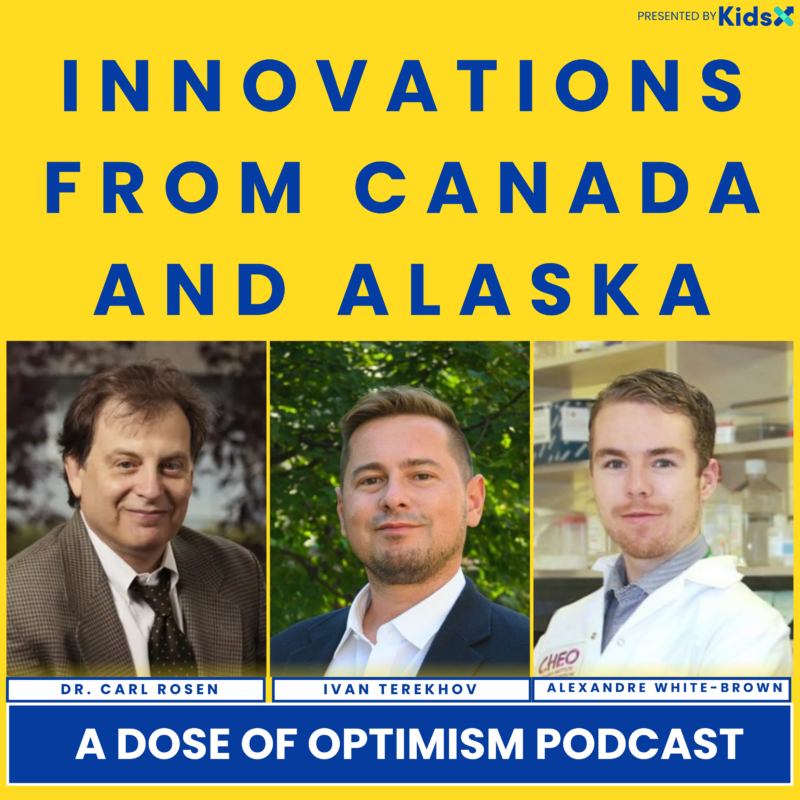
Two teams. Two very different problems. And the same underlying belief: the healthcare system is missing patients, and technology can help find them.
Eye Care in the Last Frontier: Dr. Carl Rosen on MyEyesAI
Dr. Carl Rosen has been the only oculoplastic and neuro-ophthalmology surgeon in Alaska for 32 years. He is likely to remain the only one, and he knows it. Getting subspecialists to move to Alaska is, he says plainly, nearly impossible. They visit, they like what they see, and they go home.
The state has about 24 hospitals and roughly 10 ophthalmologists, only six of whom reliably take call. There are two pediatric ophthalmologists, neither working full time. One private hospital maintains EMTALA emergency call coverage. And for patients in Nome, Barrow, Bethel, or Sitka, communities hours from Anchorage by air, a child with a ruptured globe or a retinal detachment depends on whether someone in an emergency department can reach a specialist.
MyEyesAI is Dr. Rosen’s answer
The platform has two modes. For settings with equipment, fundus cameras, devices that measure intraocular pressure, image data is captured locally and uploaded to a desktop interface. For settings without, a tablet or iPhone becomes the capture device: visual acuity, an external image, intraocular pressure estimated with a handheld tool. Either way, the data is transmitted to Dr. Rosen or a partner, who reviews it through the platform, video conferences with the patient, and delivers a consultation that includes image interpretation, a diagnosis, an urgency score (routine, urgent, semi-urgent, or emergent), and a treatment plan.
The AI component follows the physician, not the other way around. The doctor goes first. The AI assists with diagnostic support, report generation, data extraction from referrals, and routing to the appropriate specialist. The platform reduces the drudgery of the office, speeds up the triage Department of Corrections process, and, most importantly, means that a child in a remote Alaskan community doesn’t wait four or five months to see a specialist.
After 300 patients and a contract with a senior facility, Dr. Rosen believes MyEyesAI is close to the inflection point where it begins to scale meaningfully, into facilities, rural hospitals, and any setting where mobility is limited and ophthalmology subspecialists are absent.
Ending the Diagnostic Odyssey: Ivan Terekhov and Alexandre White-Brown on ThinkRare
The diagnostic odyssey for a child with a rare disease lasts, on average, five to ten years. Sometimes more than twenty. During that time, families cycle through specialists, accumulate incorrect diagnoses, blame themselves, and fight for answers that the healthcare system isn’t set up to provide.
The core problem, identified by the Global Commission to End the Diagnostic Odyssey in 2019, is straightforward: if you’re not a genetic specialist, you’re unlikely to recognize the multi-system presentation of a rare disease as a genetics referral. And so children who should be in the genetics clinic keep getting sent everywhere else.
Ivan Terekhov and Alexandre White-Brown, from CHEO’s research informatics and clinical genetics teams respectively, built ThinkRare to find those children.
The system works by scanning CHEO’s active patient population, the last three years of patients being actively seen, every day. An algorithm, calibrated through six iterations of clinician-curated expert criteria, identifies patients whose presentation is consistent with an undiagnosed rare disease and who have not yet been referred to genetics. At the end of each week, Alex reviews the flagged charts. Confirmed candidates are referred to the most responsible provider with a recommendation for genetics referral.
The volume is deliberately calibrated: five to ten patients a month, not hundreds. The goal is to find the right patients, not to flood the genetics queue. And the outcomes reflect that calibration: among patients who go through the full ThinkRare process, the diagnostic yield is 70%, double the approximately 35% yield of a standard genetics referral.
The results across the patient population are striking. In the retrospective phase, the algorithm surfaced teenagers who had been bouncing around the system for 17 years. In the prospective phase, patients are now being identified at an average age of one to two years, with some identified as early as two months old and diagnosed by five months.
The impact extends beyond the diagnosis itself. A child who couldn’t get additional educational resources because they didn’t have a formal diagnosis can now access them. A child being monitored by neurosurgery for a condition that turns out to be benign as part of their rare disease can be safely stepped down from that follow-up, reducing both patient burden and healthcare utilization. And a child with a condition carrying a 30% lifetime risk of renal cancer can begin early screening, potentially catching a cancer before it develops.
ThinkRare is now expanding across Canada, with implementation underway at McMaster Children’s Hospital in Hamilton and Alberta Health Services. The team is also layering large language model approaches onto the existing algorithm to improve analysis of unstructured data, clinical notes and correspondence that contain signal the structured data alone can’t capture.
Key Topics Discussed:
- The subspecialty desert in remote Alaska and the ophthalmology access gap
- Building a teleophthalmology platform from 30 years of clinical experience
- AI as a support tool for physicians, not a replacement
- Urgency scoring and triage in teleophthalmology
- Department of Corrections and senior facilities as underserved populations
- The rare disease diagnostic odyssey: five to twenty-plus year timelines
- The Global Commission to End the Diagnostic Odyssey recommendation (2019)
- ThinkRare: algorithm design, calibration, and diagnostic yield
- Expert system approaches vs. large language models in small, unbalanced datasets
- Retrospective vs. prospective patient identification
- Educational, social, and clinical benefits of early rare disease diagnosis
- Healthcare utilization reduction through appropriate diagnosis
- Scaling ThinkRare nationally and internationally
- Navigating AI regulatory pathways in Canada
About Dr. Carl Rosen:
Dr. Rosen joined Ophthalmic Associates in 1994. He was Alaska’s first and remains the only board-certified, fellowship-trained orbital and oculoplastic surgeon, as well as the only board-certified, fellowship-trained neuro-ophthalmologist. Dr. Rosen employs his skill and extensive experience to work on a range of patients, including those who have encountered severe trauma. Raised in the northeast, Dr. Rosen received his B.A., cum laude, from Amherst College in 1982; his M.A. in immunology from Harvard University in 1986; and his M.D. from Boston University in 1988. He completed his ophthalmology residency at the Albert Einstein College of Medicine in 1993 and followed with an oculoplastics, orbital surgery, and neuro-ophthalmology fellowship at Allegheny General Hospital, Pittsburgh, PA, in 1994. He became board certified and a fellow of the American Academy of Ophthalmology in 1995. Dr. Rosen has published numerous articles in major medical journals including a book chapter on Graves’ Orbitopathy. He has also received an award for his research on Graves’ Orbitopathy.
About Ivan Terekhov:
Ivan is a data architect with over 10 years of experience in working with Electronic Medical Records. He is currently the Director of Research Informatics, AI and Technology at the CHEO Research Institute in Ottawa, Ontario where he leads the data science, data warehouse and high performance computing teams working on applied AI projects in pediatric healthcare. He has recently completed a fellowship in AI and Human Centred Leadership at the Dalla Lana School of Public Health at the University of Toronto and is the technical lead for the ThinkRare project.
About Alexandre White-Brown:
Alexandre is a Clinical and Research Genetic Counsellor at the Children’s Hospital of Eastern Ontario (CHEO) in Ottawa, where he provides specialized care in the Prenatal Diagnosis and Neurogenetics clinics. He is the Project Manager and Clinical Content Specialist for the ThinkRare project, and co-leads research initiatives evaluating the impact of early genetic testing at the time of Genetics referral and exploring the use of methylomics to investigate individuals with unexplained congenital malformation syndromes.
